◉
Vacuum Insulation
The vacuum between the tube walls greatly limits heat transfer by convection, helping reduce heat loss from the absorber.
Rooftop solar water heating solutions for homes, schools, colleges, government hostels and public/commercial buildings. Use sunlight to heat water and potentially reduce electric geyser use with the right system.
A solar water heater captures the Sun’s thermal energy and uses it to heat water. An ETC model typically has a row of double-wall glass tubes connected to an insulated storage tank.
The tubes absorb solar radiation. A vacuum layer between the glass walls helps reduce heat loss, while the insulated tank helps keep the collected hot water warm for later use.
Benefits depend on the actual product specification, installation, sunlight, water quality and usage. These are technology advantages—not a guarantee of identical results at every site.
The vacuum between the tube walls greatly limits heat transfer by convection, helping reduce heat loss from the absorber.
A selective coating on the inner tube helps absorb incoming solar radiation and convert it into heat.
In compatible thermosiphon systems, warmer water rises and cooler water moves down, allowing circulation without a circulation pump.
An insulated tank slows heat loss, helping keep collected water warm after sunshine hours.
Some ETC designs allow a damaged tube to be replaced individually. Confirm design and spare availability for the selected model.
Can be evaluated for homes, guest houses, hostels, hotels and other suitable hot-water applications.
Solar water heating sunlight ki thermal energy use karta hai—electricity generate karne wale solar PV panels se alag technology.
ETC jaise thermosiphon solar water heater mein sunlight se paani garam ho sakta hai aur natural circulation ke liye circulation pump ki zarurat nahi hoti. Is design mein water heating ke liye normal electric geyser jaisi direct electricity consumption nahi hoti.
Kuch commercial systems pumps, controllers ya electric/heat-pump backup use kar sakte hain. Badal, winter, high demand aur installation design ke hisaab se backup heating ki zarurat bhi pad sakti hai.
See the actual type of equipment used for solar water heating. Product models, prices and availability should be confirmed directly before ordering.
Rows of double-wall glass tubes connect to an insulated tank. The vacuum layer reduces heat loss from the absorber.
ASK ABOUT ETC ↗Collectors should be positioned with suitable sunlight exposure, safe structural support and service access.
ASK ABOUT INSTALLATION ↗For hotels, hostels and institutions, sizing should use actual daily hot-water demand and peak usage patterns.
ASK ABOUT COMMERCIAL ↗Product photographs are used as visual examples from an external solar-thermal manufacturer page; they do not imply affiliation, dealership or that these exact models are sold by Goldstar. Replace them with your own authorised product photos when available.
Homes se lekar schools, colleges, government hostels, hospitals, staff quarters aur large campuses tak—solar thermal hot-water systems alag-alag scale par install kiye ja sakte hain. Neeche ki photos illustrative references hain, Goldstar ke apne completed projects ka claim nahi.
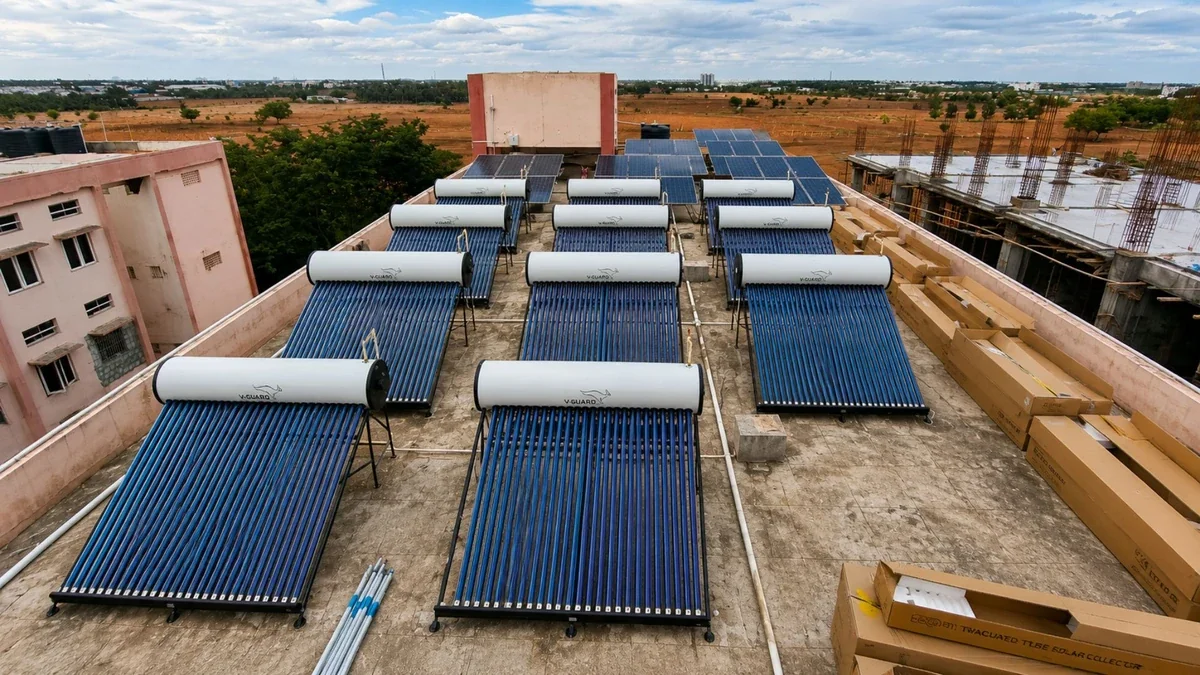
Campus accommodation mein hot-water demand ke liye solar thermal installation ka example.
Institution source ↗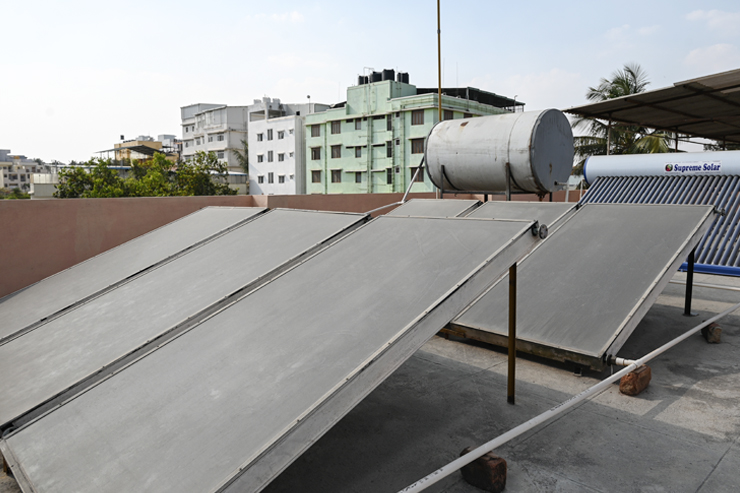
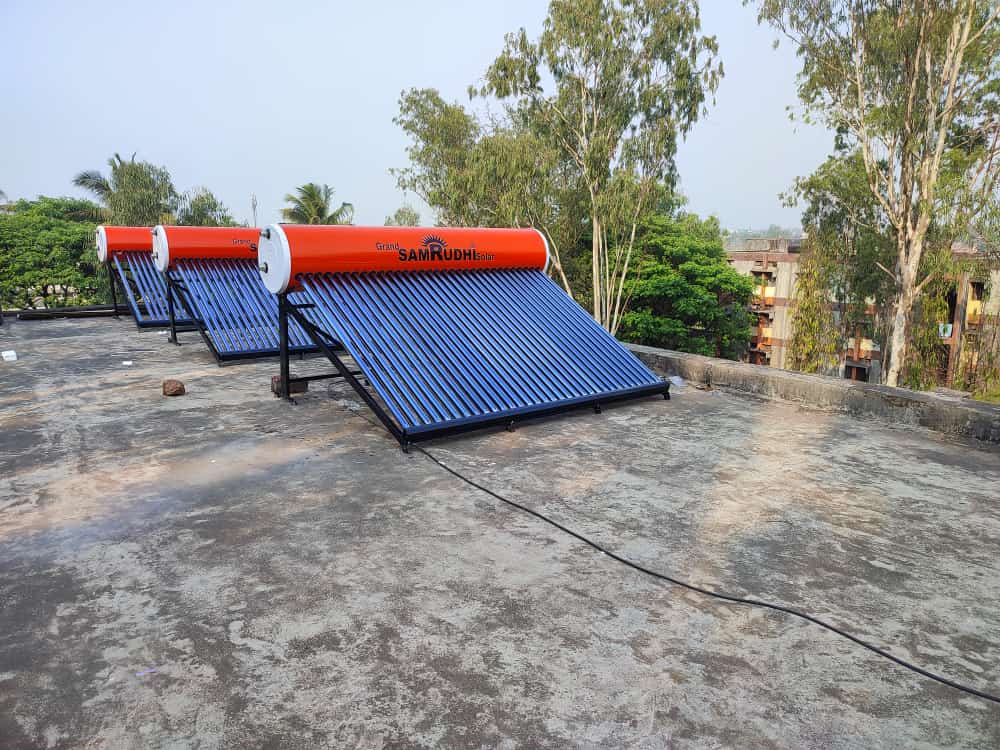
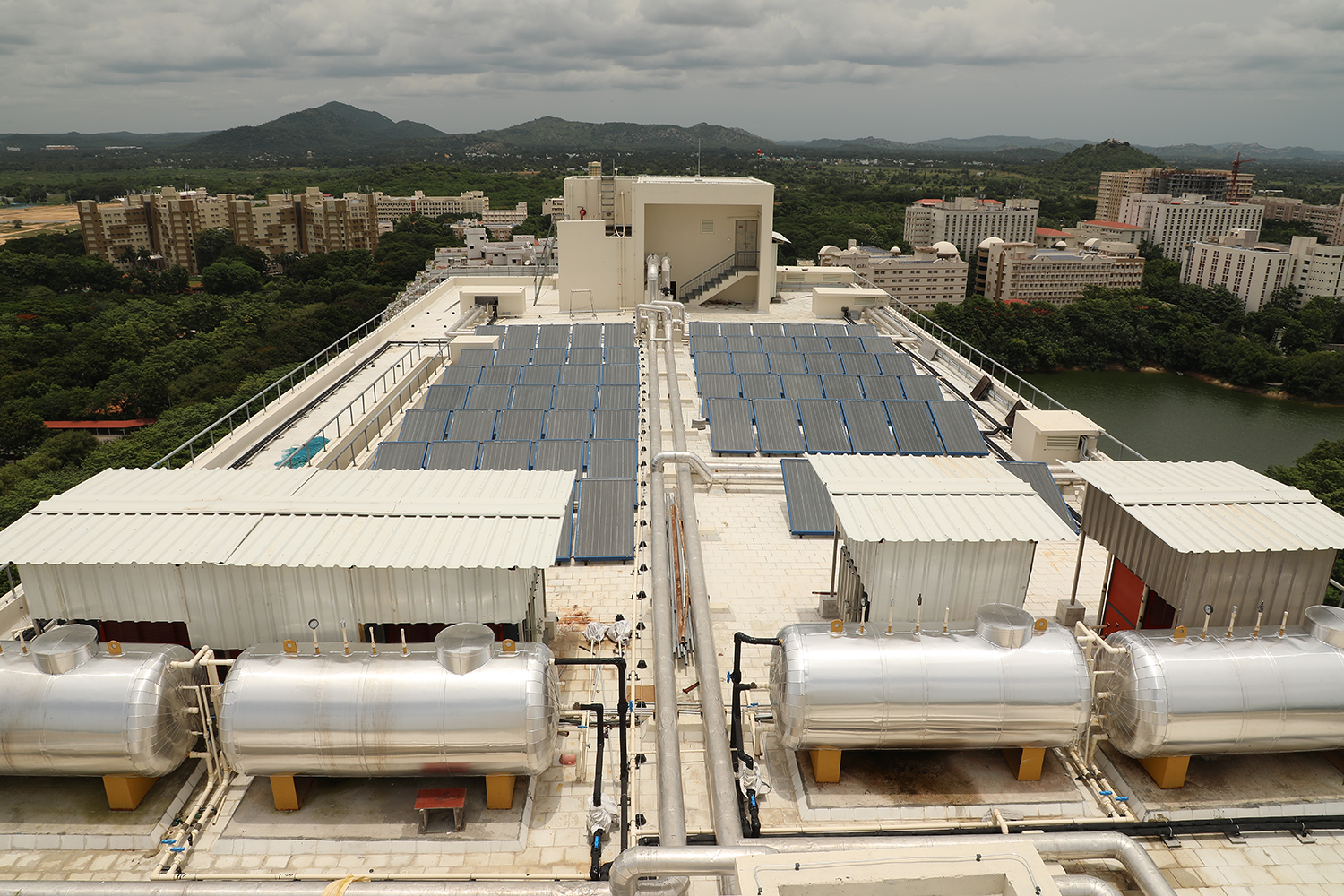
High hot-water demand wale colleges, government hostels aur public campuses ke liye centralised arrangement evaluate kiya ja sakta hai.
Institution source ↗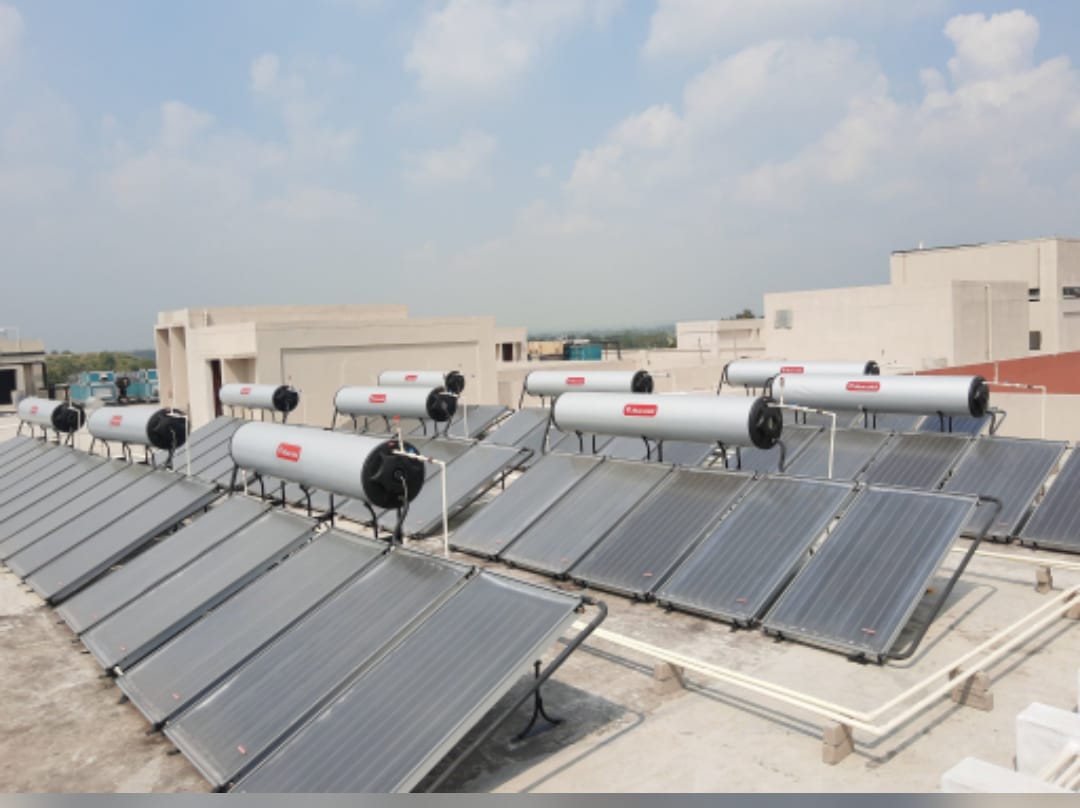
Multiple collector arrays aur insulated tanks wale larger hot-water setup ka example.
Image source ↗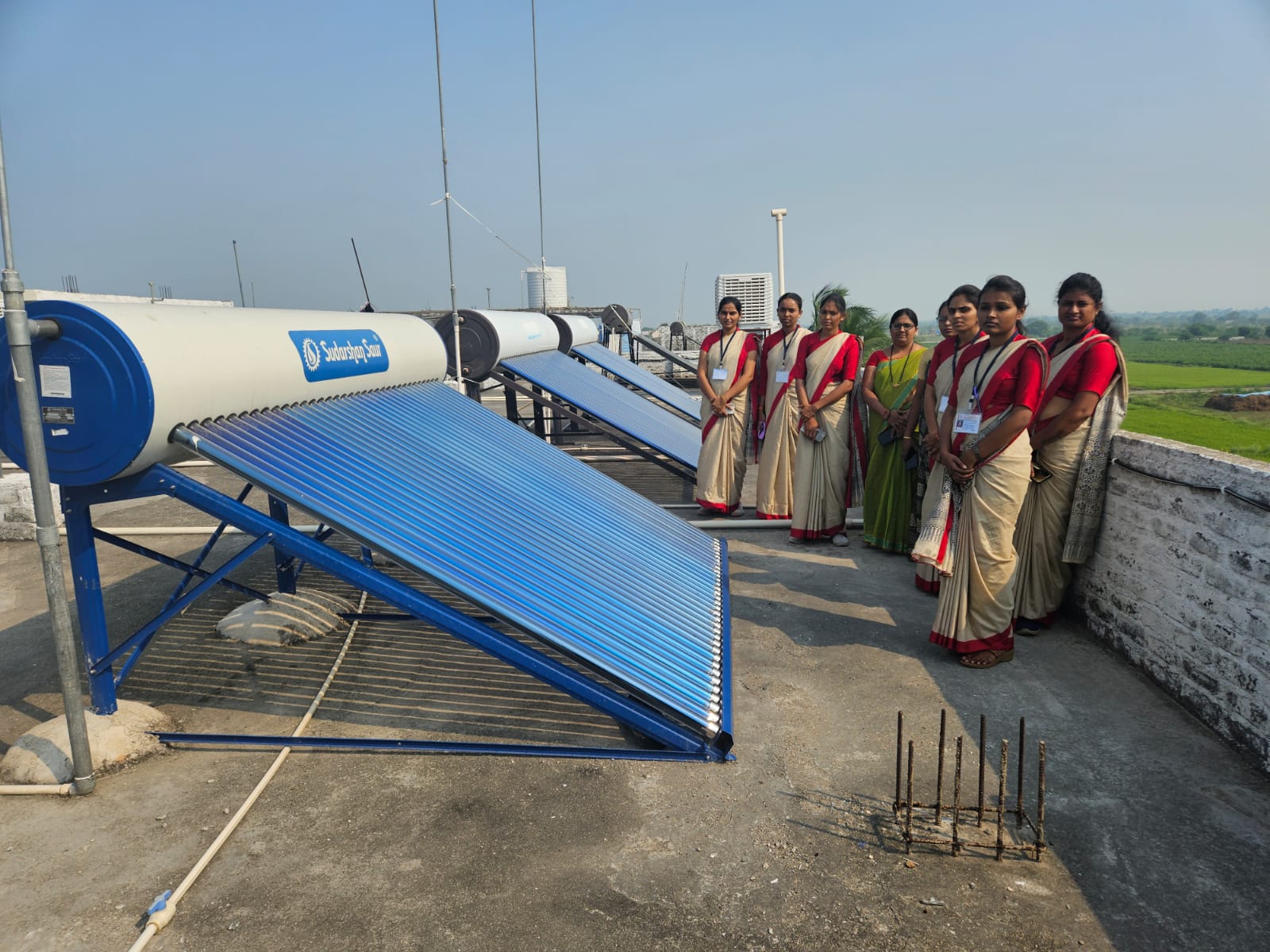
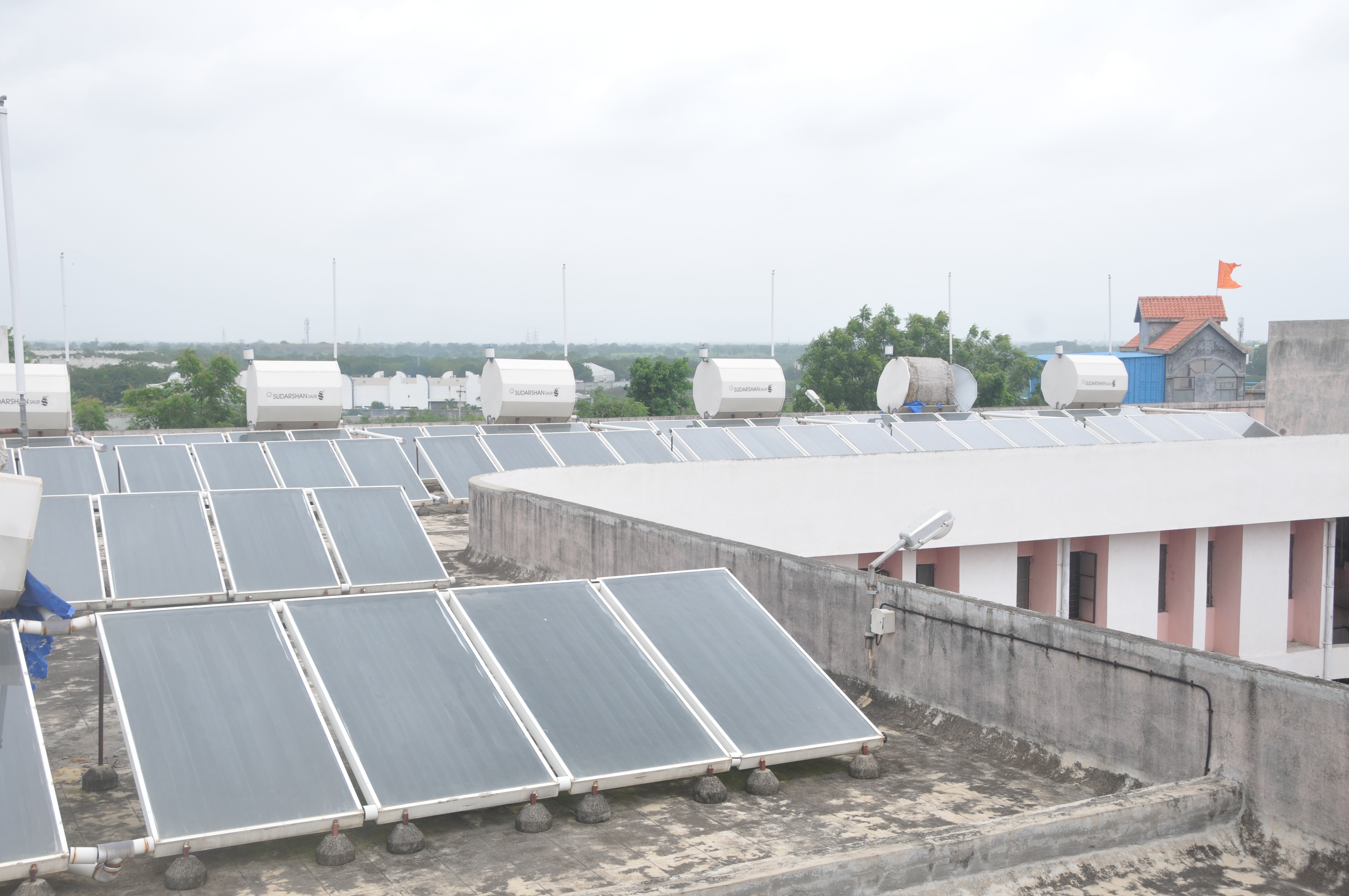
Educational building par solar water heater equipment ka illustrative example.
Institution source ↗Commercial hot-water systems mein collector banks ko site demand ke mutabik size kiya jata hai.
Image source ↗Hostels, hospitals, hotels aur institutions ke liye engineered central systems evaluate kiye ja sakte hain.
Image source ↗Glazed thermal collectors connected to insulated storage tanks; suitable system selection depends on site requirements.
Image source ↗Close view of parallel vacuum tubes that absorb solar radiation and transfer heat to the system.
Image source ↗
A tube-based solar water heater on a home rooftop; shown as a general reference installation.
Wikimedia Commons · CC BY-SA 4.0 ↗Photos are displayed as external illustrative references. Their respective owners retain applicable rights. They are not represented as Goldstar installations or endorsements. Image availability depends on the external source website.
Solar thermal collectors convert radiation into heat; they do not generate electricity like photovoltaic panels.
Sunlight reaches a selective absorber coating inside the tube, where radiant energy is converted into thermal energy.
The evacuated space between glass walls limits convection and reduces conductive heat transfer across the vacuum gap.
Heat moves into the water through the system design. The insulated tank stores hot water; circulation method depends on the model.
Use this simple estimate to understand the energy used by an electric geyser. Solar savings vary and should be estimated for your own usage.
Enter the geyser’s rated power and daily running time.
Estimate assumes full rated power for the entered time; actual use may be lower due to thermostat cycling.
At full power, a 2 kW geyser running for 30 minutes uses approximately 1 kWh (one electricity unit). Running for one hour uses approximately 2 units.
A solar water heater may offset some of the energy otherwise needed to heat water. The amount depends on solar availability, tank size, incoming water temperature, hot-water demand, insulation, backup use and system condition.
Scientific formula: Electrical energy (kWh) = power (kW) × operating time (hours). This is an illustrative calculation, not a guaranteed saving or bill reduction.
Glass tubes and the absorber coating capture solar radiation and convert it into heat.
Heat warms water through the collector's designed circulation or heat-transfer arrangement.
An insulated tank keeps water hot for later use. Backup heating can help when sunlight is insufficient.
Tell us your location, daily hot-water requirement and property type. Enquire about product options, capacity and pricing.
SEND AN ENQUIRY ↗Send your requirements through WhatsApp. Your message will open for review; the website does not store form submissions.